Privacy Maze
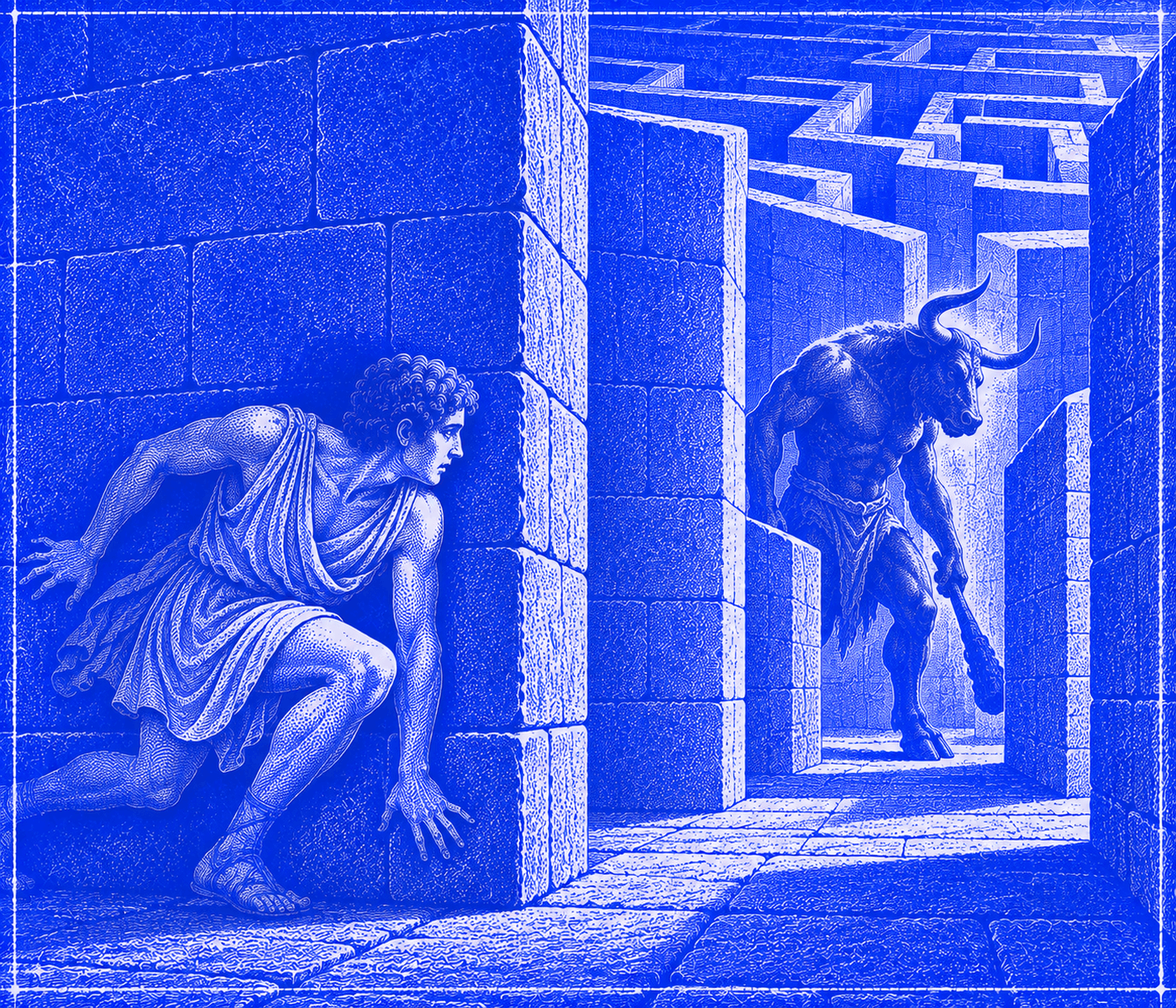
The Privacy Maze pattern is a consent-scoped specialization of Labyrinthine Navigation. It deliberately introduces disproportionate navigational friction and complexity into the process of declining data collection or adjusting privacy settings. While maximizing data extraction (e.g., “Accept All”) is typically facilitated by a frictionless, single-click vector, minimizing data extraction requires the user to traverse a deep navigational graph, interact with an overwhelming density of granular toggles, and decipher obfuscated pathways. This architectural hostility actively exploits decision fatigue and default effects, ensuring that the cognitive cost of protecting one's privacy vastly outweighs the cost of surrendering it.
1
Asymmetrical Path Depth
Condition 1: Asymmetrical Path Depth
Given
To model the structural friction of the consent architecture, we represent the interface as a directed graph , where encapsulates the interface states and signifies user interaction events, such as clicks. Starting from , the initial state of the privacy prompt upon page load, we identify two critical terminal states: and , representing maximum and minimum data consent, respectively. By calculating as the minimum number of edges required to traverse from state to state , the feature triggers if the navigational effort required to reject tracking strictly exceeds the effort required to accept it. This mathematical disparity, or a rejection path exceeding a heuristic depth threshold , proves the presence of deliberate structural friction:
2
Visual Prominence Disparity
Condition 2: Visual Prominence Disparity
Given
Beyond structural depth, the interface often weaponizes visual hierarchy to suppress user agency. We isolate as the primary node for maximum consent and as the node required to initiate the opt-out flow. Applying a visual prominence function calculated via the vision-language model's visual perception—which derives a composite score based on bounding box area, computed CSS contrast ratio, and z-index—we evaluate the visual weight of these opposing choices. The feature triggers if the system identifies a severe mathematical disparity in the visual prominence between the two vectors, effectively rendering the privacy-preserving route invisible against the baseline UI design constraint :
3
Semantic Obfuscation of Privacy-Related Terminology
Condition 3: Semantic Obfuscation of Privacy-Related Terminology
Given
To establish a semantic baseline for Privacy Maze, the algorithm measures the FKGL readability and lexical complexity of text nodes within privacy-settings pages. The feature triggers if privacy-critical text—cookie descriptions, data-sharing explanations, consent requests—registers an FKGL score above 14 or a lexical density (ratio of unique terms to total words) exceeding , indicating that the interface deploys unnecessarily complex vocabulary to discourage informed consent: