Cuteness
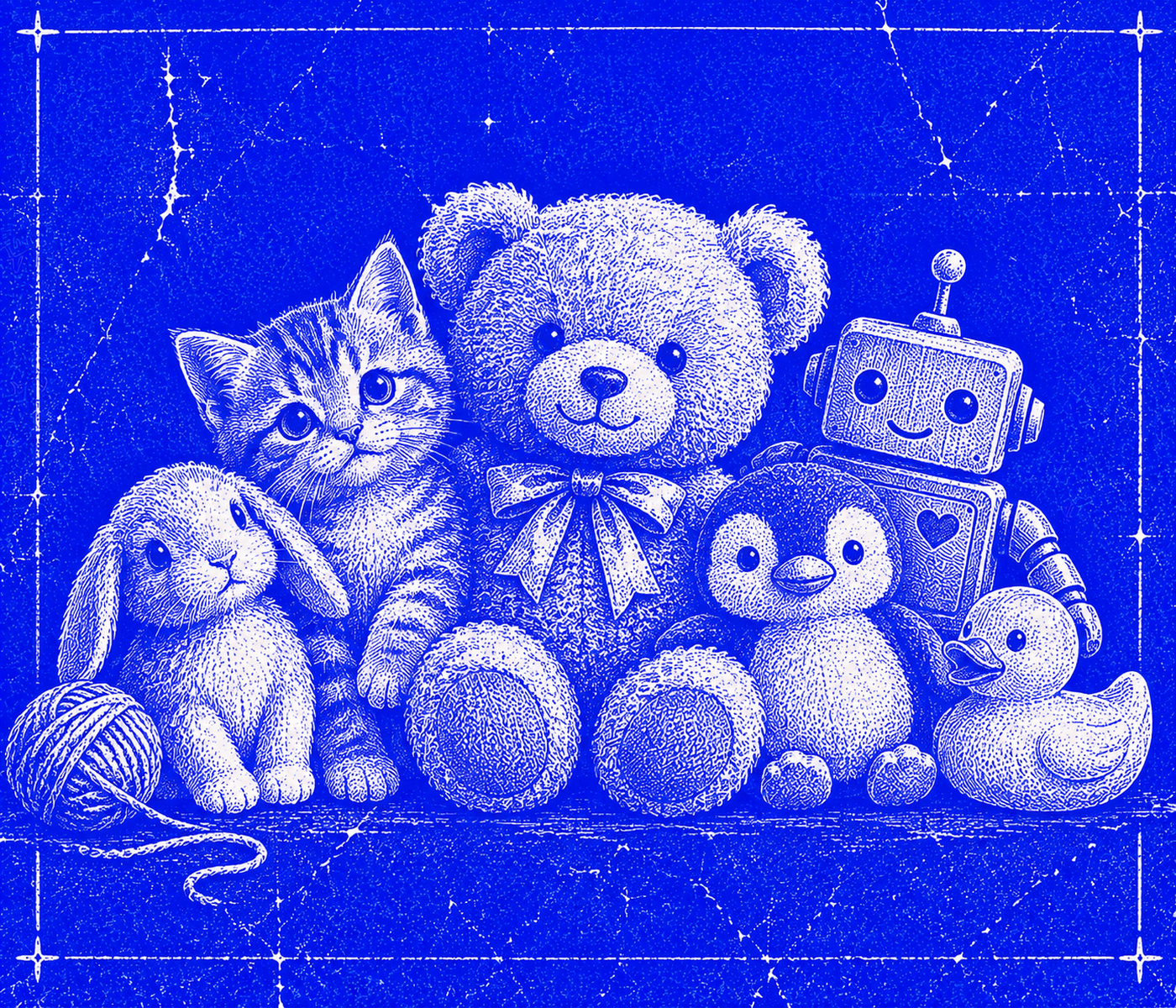
The Cuteness dark pattern is a distinct form of emotional and sensory manipulation. It leverages anthropomorphism and high-valence emotional imagery (such as a crying mascot, a sad animal, or exaggerated pleading expressions) to induce unwarranted guilt or empathy in the user. This pattern is almost exclusively deployed during separation flows—such as unsubscribing from a newsletter or canceling a service—acting as a psychological friction barrier rather than a structural one. By framing the user's objective, rational decision as an act of emotional harm to a fictional entity, the interface attempts to manufacture parasocial distress, coercing the user into abandoning their intended action.
1
Structural Conditional Injection of Affective Assets
Condition 1: Structural Conditional Injection of Affective Assets
Given
To establish a structural baseline for Cuteness, the algorithm models the DOM mutation log during a user session and cross-references it against the application state machine. The feature triggers if image nodes classified as affective (, containing anthropomorphic or high-valence imagery) are exclusively injected into the DOM during cancellation or opt-out flows () and are structurally absent during onboarding or normal usage ():
2
Context-Dependent Image Injection
Condition 2: Context-Dependent Image Injection
Given
To detect the manipulative visual deployment of affective assets, we model the application flow as a state machine where is the acquisition state and is the termination state. We track the bounding box properties of all rendered image elements during each state. The feature triggers if specific graphical assets, denoted as , are deliberately withheld during standard usage but injected exclusively during the termination flow with visual properties engineered to maximize emotional impact—specifically, an affective image is rendered at a viewport-dominant scale (its bounding box area exceeds a prominence threshold ) or at a high-contrast, emotionally salient chromatic profile:
3
Semantic Pairing of Guilt
Condition 3: Semantic Pairing of Guilt
Given
Emotional manipulation is most effective when visual and semantic cues are combined. We identify as the textual node rendered in immediate proximity to the image , structurally verified via vision-language model bounding box intersection or DOM tree sibling relationships. Applying an NLP function that maps text to an emotional vector—specifically scoring for guilt-inducing semantics or parasocial distress (e.g., “You are breaking our heart”, “Sad to see you go”)—the feature evaluates the combined payload. It triggers if the text reinforces the visual emotional manipulation, creating a compound psychological barrier to the cancellation event. This is mathematically verified when the affective score surpasses a manipulation threshold and the spatial distance falls within a strict proximity boundary , ensuring the text and image act as a single contextual unit: